Meet Khan Academy’s new AP Precalculus course and revised AP Calculus AB course—free, CED-aligned support built for the way teachers actually plan and assign.
AP math teachers already have enough variables. Modifying a supplemental resource that follows a completely different course sequence should not be one of them.
That’s why Khan Academy’s new AP Precalculus course and revised AP Calculus AB course are both organized around the current College Board Course and Exam Description (CED).
That means you can move from the unit or topic you’re teaching right to relevant videos, articles, exercises, and support without adapting two different maps.
One course is brand-new. The other has been thoroughly revised. Both are free, flexible, and designed to work alongside the AP math curriculum you already use.
Your pacing guide called. It wants fewer adaptation problems.
When a resource organizes content differently from your core curriculum, finding “extra practice” can become its own planning task. You may know exactly what students need but still spend time hunting for the lesson, skill, or representation that actually matches today’s instruction.
The AP Precalculus course mirrors the official CED unit by unit and topic by topic. The AP Calculus AB course also aligns directly with the current CED. You can assign a single exercise after a lesson, use a video or article to introduce a topic, or pull together a larger set of resources for review without rebuilding your pacing plan around the platform.
AP Precalculus: built for the course teachers are actually teaching
Because AP Precalculus is still a relatively new course, teachers have had fewer established supplemental resources from which to draw. Khan Academy’s course was built from the ground up for AP Precalculus rather than repackaged from a general precalculus course.
Functions are the through line. Students work with their properties, behavior, and representations not only by calculating an answer, but also by reasoning about what a function is doing and communicating that thinking in the language the course expects.
The course includes 14 new instructional videos and five original articles focused on challenging foundational concepts. It also begins with Algebra 2 review articles, giving students a place to revisit prerequisite skills before those gaps start compounding.

Support the “Wait, why?” moment
A correct answer is useful. A clear explanation of why the answer works is what helps students transfer the idea to the next problem.
The AP Precalculus course includes multistep hints that unpack the reasoning behind difficult choices. For example, instead of stopping at “Use the positive root,” the support connects the decision to the function’s restricted domain and the range of its inverse.

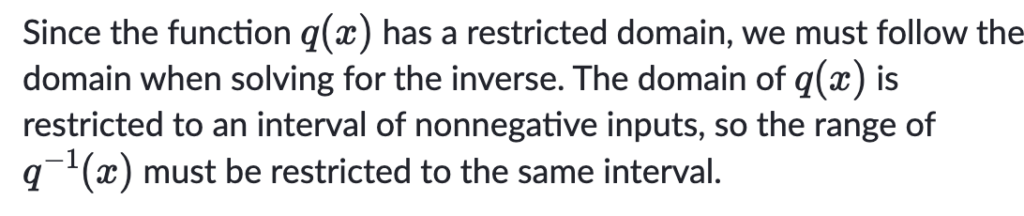
That kind of scaffold gives students a productive next step when you’re conferencing with another student, running a small group, or simply asking the class to keep working independently for a few more minutes.
AP Calculus AB: make the reasoning visible
In AP Calculus AB, students can know the mathematics and still leave points on the table because their written response does not make the reasoning visible. The free-response section asks them to justify, interpret, use appropriate notation, and communicate a complete mathematical argument—not just arrive at a number.
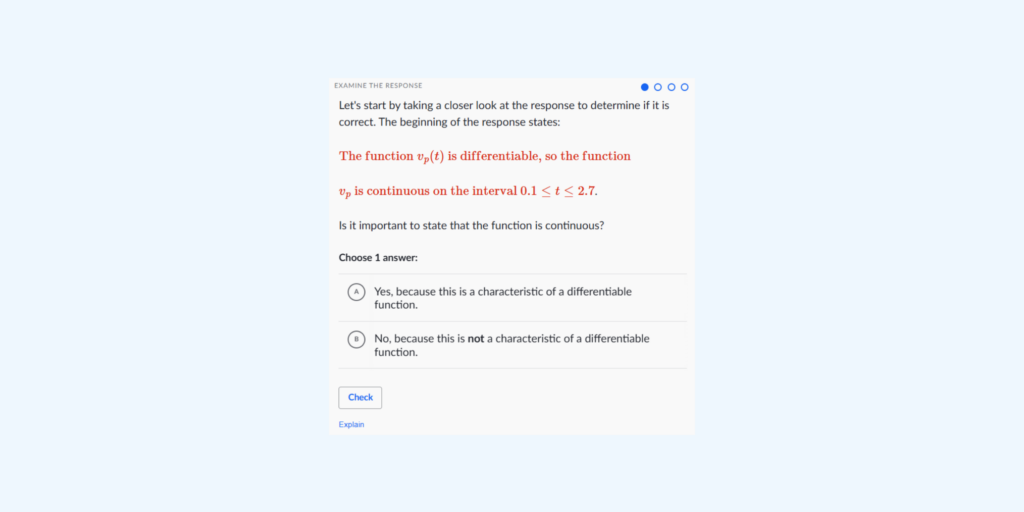
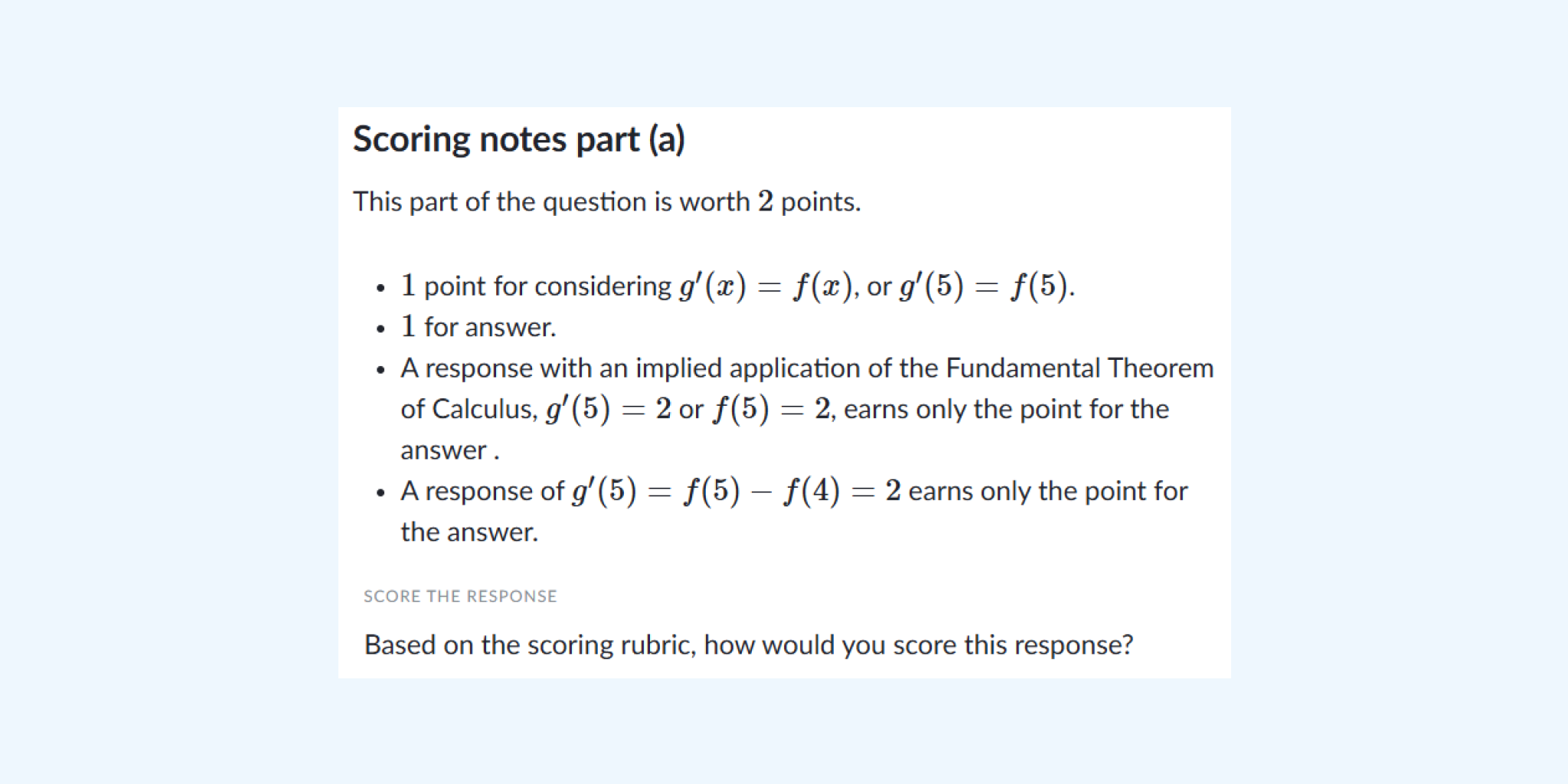
Khan Academy’s revised AP Calculus AB course includes new articles, videos, and exercises designed to teach every essential skill listed in the current course description. It also adds focused free-response support: sample questions similar to AP prompts, sample student responses, scoring information, and guided practice that helps students examine what a strong answer includes.
Bring the scoring conversation into the lesson
The scoring logic behind an AP free-response question can feel invisible until students see it up close. The revised course makes that logic part of the learning experience. Students can compare a response with scoring notes, decide what earns credit, and identify what is incomplete, unnecessary, or unsupported.
These resources do not replace teacher feedback. They extend it. Students get another opportunity to self-assess and revise outside the moments when you can sit beside them. When that’s not possible, videos walk through free-response questions from previous AP exam administrations to give them a model for approaching authentic problems.
Four ways to use the courses next week
- Before class: Assign a short video or article so students encounter the model, notation, or representation before the lesson begins.
- After instruction: Choose an exercise that maps to the topic you just taught, and use the results to decide what needs another pass.
- During independent work: Point students toward multistep hints, prerequisite review, or a second explanation while you support another group.
- On an FRQ day: Have students examine a sample response, apply scoring notes, and revise the reasoning before they write a complete response of their own.
Start with one lesson—not a whole new system
You do not need to overhaul your AP math course to use these resources. Open the Khan Academy course beside your pacing guide. Find the unit you’re teaching now. Preview one video, one article, or one exercise, and decide where it could remove friction for you or your students.