College works—but not for everyone.
It can be expensive. And too often, it measures time spent, not what you can actually do.
But learning doesn’t have to work that way.
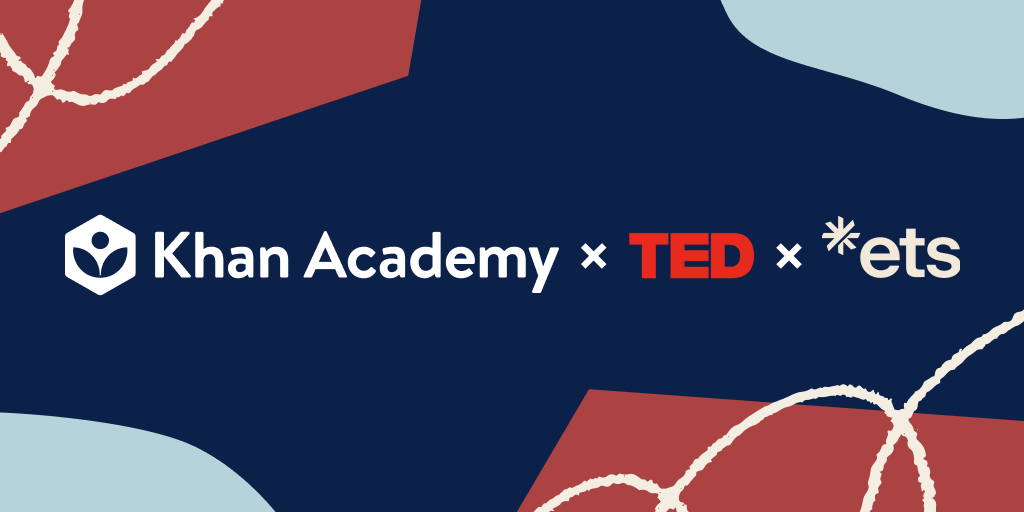
Today at TED2026, the nonprofit organizations Khan Academy, TED, and ETS announced the Khan TED Institute, a new approach to higher education designed for a changing world. This is not about replacing traditional universities but about expanding the set of options available to learners.
AI is already transforming how we work, collaborate, and solve problems. It’s raising new questions about what people need to learn and how they demonstrate what they can do.
The goal is simple: make a rigorous, high-quality education accessible to far more people while focusing on what learners can actually do, not just on how long they’ve spent in a classroom.
“For a long time, access to a high-quality education has been constrained by cost and time,” said Sal Khan, founder & CEO of Khan Academy and vision steward of TED. “We’re exploring what it looks like to flip that—to focus on what you can actually demonstrate while keeping the bar high and the door open to many more people.”
What will the Khan TED Institute look like?
It means shifting from time to mastery. You don’t move forward because you’ve spent enough hours in a class. You move forward because you can show what you know.
Learning connects to the real world, not just theory. You apply what you’re learning and build skills along the way.
You also develop the human skills that matter just as much: how to think clearly, communicate, and work with others.
This isn’t just about preparing for jobs. It’s about helping people engage with ideas and contribute meaningfully to their communities and the wider world.
Built together
We’re building this as a collaboration between three nonprofit organizations that share a mission to expand access to learning:
- Khan Academy, with a mission to provide a free, world-class education for anyone, anywhere
- TED, which has spent decades sharing ideas that shape how we understand the world
- ETS, with deep expertise in measuring skills and opening doors through assessment
Together, we’re exploring what a new model of higher education could be and what it could make possible for learners around the world.
We’re also working with corporate thought partners like Google, Microsoft, Accenture, Bain, McKinsey and Replit to help ensure the skills learners build here connect to real opportunities and real-world needs.
Through TED’s global network and convenings, learners will engage with ideas and conversations shaping the future of work and AI.
Designed for what comes next
The Khan TED Institute is still in development, but the vision is clear.
You would build strong foundations in subjects like math, science, economics, and writing while also learning how to use AI to solve real problems. Along the way, you’d develop the ability to clearly communicate ideas and work effectively with others.
You’d learn alongside peers from a wide range of backgrounds and engage with thinkers and leaders from the TED community.
And you’d graduate with clear evidence of what you can do.
This could be a strong fit for people at different points in their learning journey, from someone early in their career who wants to stay relevant in an AI-driven world to a current college student or graduate considering a second bachelor’s to build new skills and deepen their understanding.
Join the waitlist to learn more.
Access, rigor, and who this is for
A big part of this vision is making high-quality education far more accessible. We’re designing the program to cost under $10,000 in total.
At the same time, this isn’t meant to be easy. It’s meant to be rigorous, challenging, and worth it for people who are curious, motivated, and ready to put in the work, wherever they’re starting from.
The Khan TED Institute is still in development and many details will evolve, including accreditation, admissions, and timeline. We expect to open applications in the next 12 to 18 months.
If you’re interested, we’d love to keep you updated as the Khan TED Institute takes shape.
Looking ahead
“This is an early step, but it’s grounded in a simple idea. Talent is everywhere, but opportunity isn’t,” said Khan. “If we combine rigor, real-world learning, and broader access, we can help more people build, contribute, and have real impact.”
More people deserve the chance to learn, build, and show what they can do.