By Megan Colburn, Marketing Lead, Khan Academy Kids
A rigorous, peer-reviewed study published in the Journal of Children and Media found that preschool-aged children from low-income families who used Khan Academy Kids at home made significantly greater gains in pre-literacy skills than children who did not — bringing their scores to nearly the national average in just 10 weeks.
The findings offer some of the strongest independent evidence to date that a free educational app can meaningfully narrow the school-readiness gap before children ever set foot in a kindergarten classroom.
How Researchers Tested Khan Academy Kids
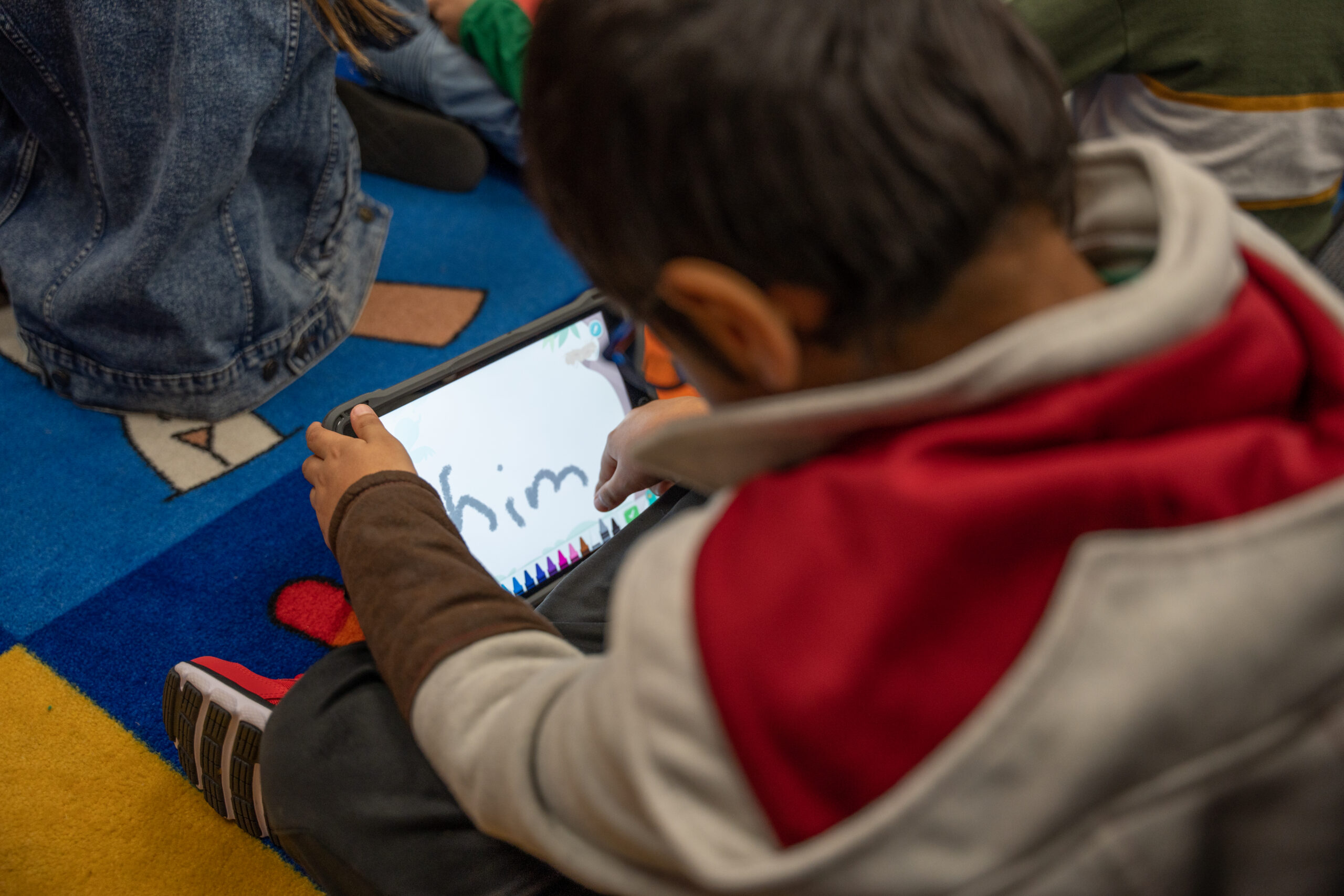
Researchers at the University of Massachusetts Amherst conducted a randomized controlled trial — the gold standard of educational research — with 49 four- and five-year-olds from low-income communities in Western Massachusetts. Children were randomly assigned to use Khan Academy Kids at home or to use age-appropriate, non-literacy-focused apps. Both groups were assessed before and after the 10-week period using the Test of Preschool Early Literacy (TOPEL), a well-validated national benchmark.
Key details:
- Median family income: $24,000
- Average app use: 13 minutes per day
- Study duration: 10 weeks
- Attrition in the Khan Academy Kids group: 0%
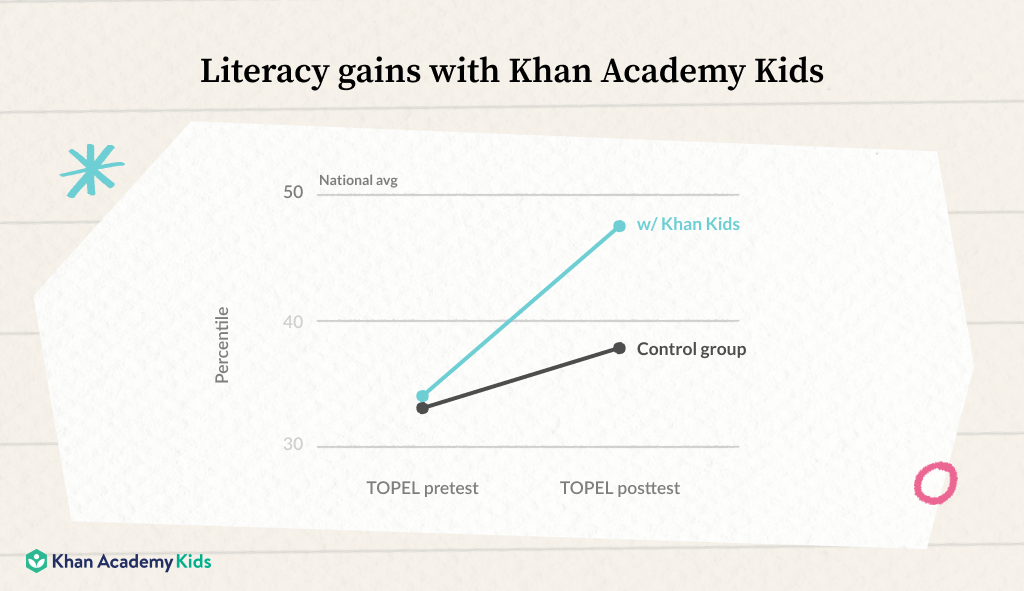
Pre-Literacy Gains After 10 Weeks with Khan Academy Kids
Children who used Khan Academy Kids showed statistically significant gains across pre-literacy skills. Children in the comparison group showed almost no change.
| Measure | KAK: Pretest Percentile | KAK: Posttest Percentile | Comparison Group Change |
| Overall Emergent Literacy | 34th | 47th | +<1 point |
| Phonological Awareness | 23rd | 47th | Minimal |
The phonological awareness gains — one of the strongest predictors of long-term reading success — are particularly notable. Independent researchers found them comparable in size to gains produced by 25 individualized one-on-one sessions with a trained professional tutor. Khan Academy Kids achieved this at zero cost to families, on a device they already owned.
Among children who used the app at least one hour per week, overall literacy scores increased by 6.3 points and phonological awareness scores by 11.3 points — more than double the gains of lower-use children.
“We feel this new app from Khan has the potential to help level the playing field to benefit these kids.”
David H. Arnold, Ph.D., Professor of Psychology, University of Massachusetts Amherst
Closing the School-Readiness Gap with Free Technology
The school-readiness gap is real, persistent, and consequential. Research consistently shows that by the time children enter kindergarten, disparities in foundational literacy skills are already deeply entrenched — and those early gaps predict long-term academic outcomes.
Until recently, high-quality educational resources required either money or institutional access. Smartphones have changed that calculus. Nearly every family across every income level now has a device. Khan Academy Kids was built to meet families where they are — and this study demonstrates that the approach works.
“Historically, the lack of equal access to technology had blocked low-income kids from having a chance at using educational software, because they had less access to computers and the Internet. But now everyone has access.”
David H. Arnold, Ph.D., Professor of Psychology, University of Massachusetts Amherst
Beyond test scores, parents in the study reported that the app gave them new ideas for teaching their children at home, suggesting the impact extends beyond screen time itself.
About Khan Academy Kids
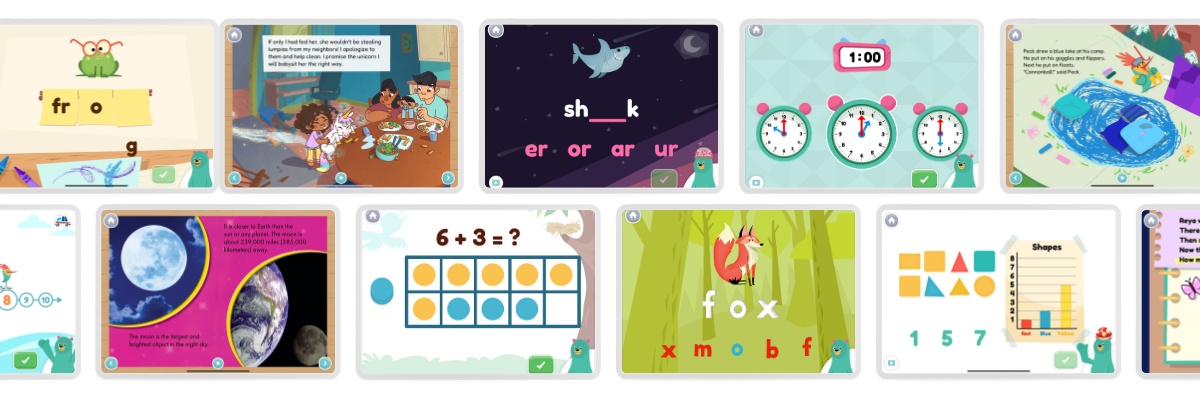
Khan Academy Kids is a free app for children ages 2–8 covering foundational reading, math, social-emotional learning, and physical development. The early literacy curriculum was developed in collaboration with learning experts at Stanford University, aligned with national standards, and informed by research on how children learn to read. The app has received Common Sense Media’s highest ratings for overall quality, educational value, and ease of use.Download Khan Academy Kids >
Download Khan Academy KidsSource: Arnold, D.H., et al. (2021). A randomized controlled trial of an educational app to improve preschoolers’ emergent literacy skills. Journal of Children and Media. DOI: 10.1080/17482798.2020.1863239